Build the spacecraft that listened to the heartbeat of Mars.
InSight—short for Interior Exploration using Seismic Investigations, Geodesy and Heat Transport—was the first mission dedicated to studying the deep interior of Mars. The robotic lander launched on May 5, 2018, and successfully touched down in the broad, flat plains of Elysium Planitia on November 26, 2018.
Unlike a rover, InSight was designed to remain in one location and listen. Its remarkably sensitive seismometer detected 1,319 marsquakes, including tremors caused by meteoroid impacts and the largest quake ever observed on another planet. These seismic signals allowed scientists to investigate the structure and composition of the Martian crust, mantle, and core.
After more than four years of groundbreaking science, dust accumulating on InSight’s solar panels gradually reduced its available power. NASA received the lander’s final communication on December 15, 2022, and formally concluded the mission later that month. Its extraordinary collection of data continues to deepen our understanding of Mars and the formation of rocky worlds—including Earth.
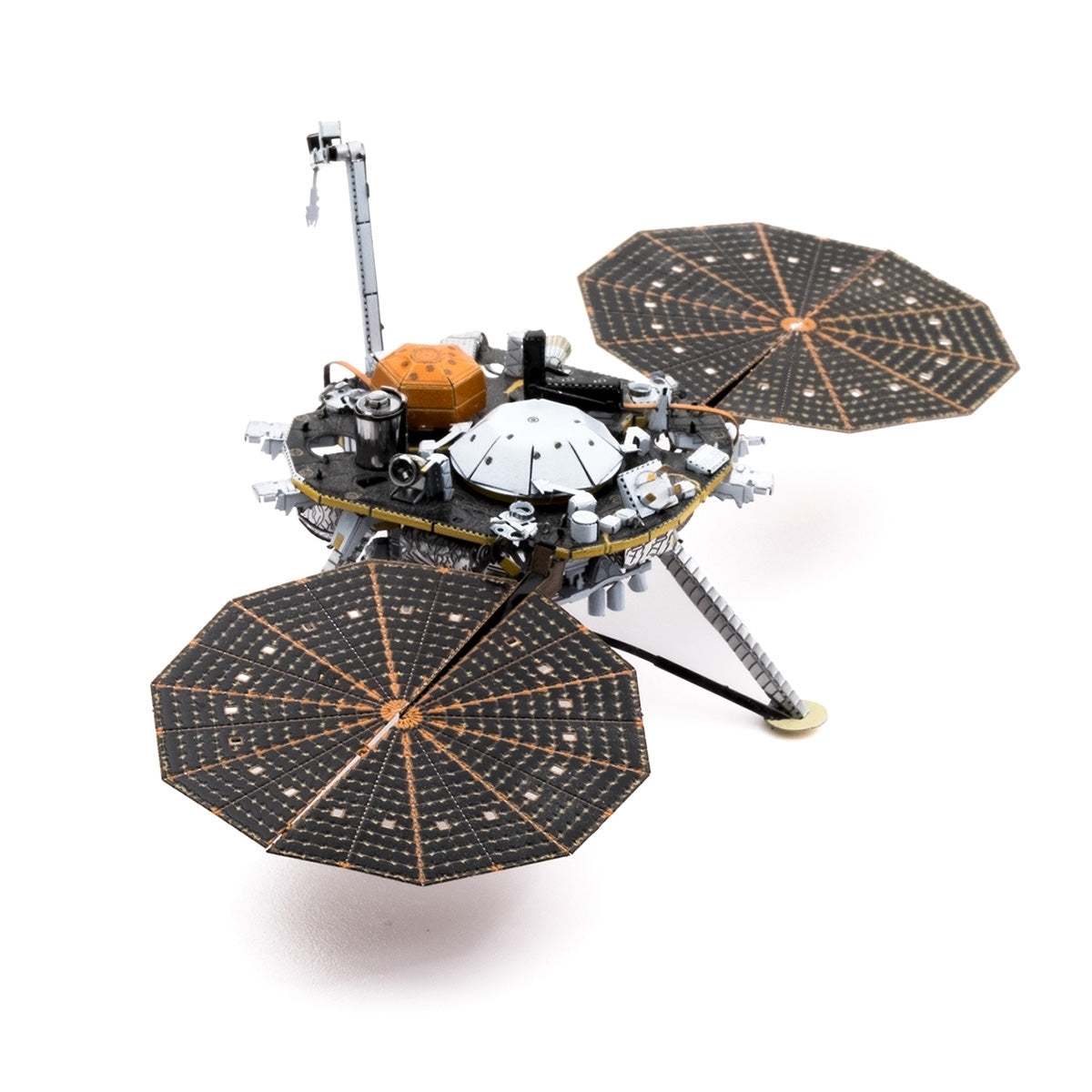
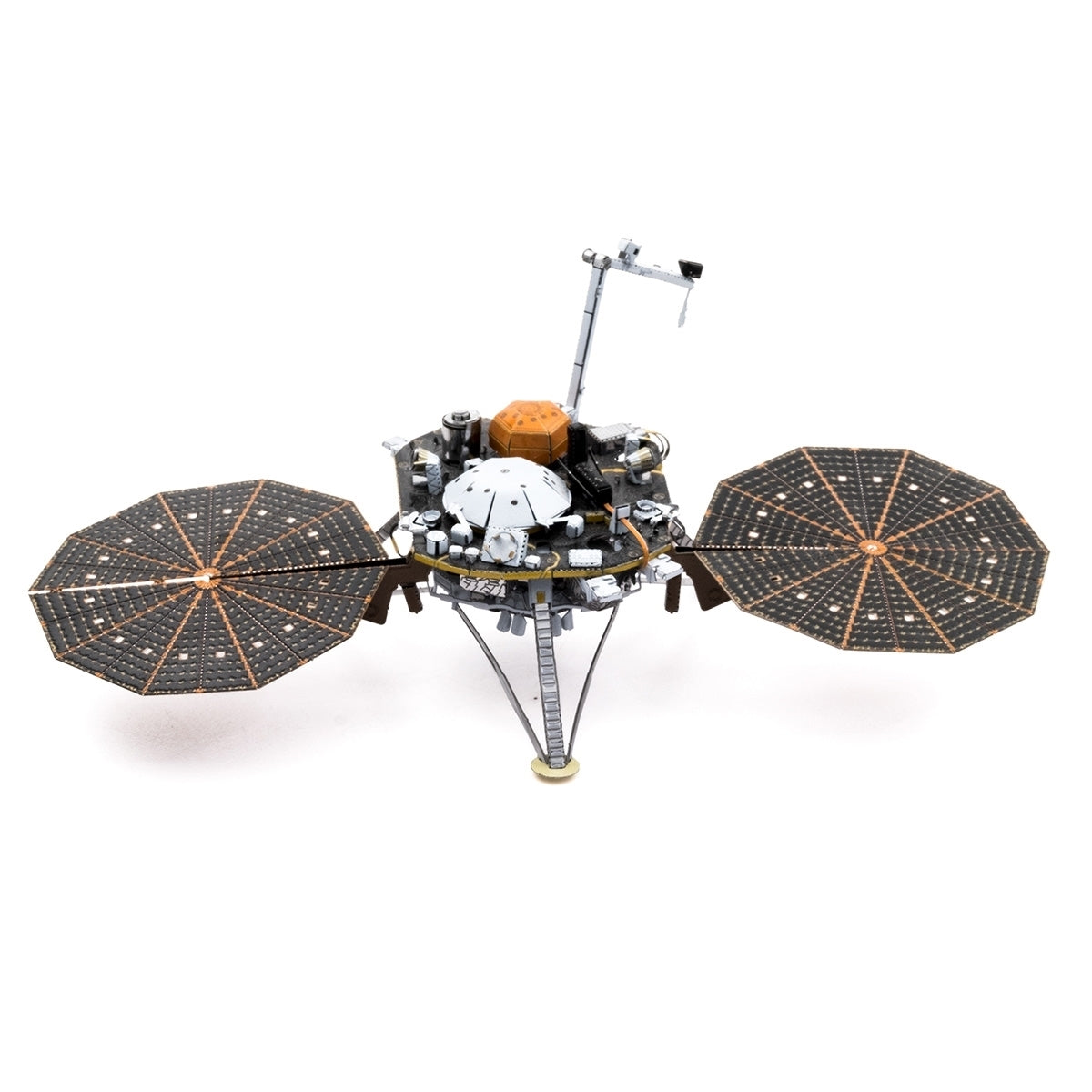
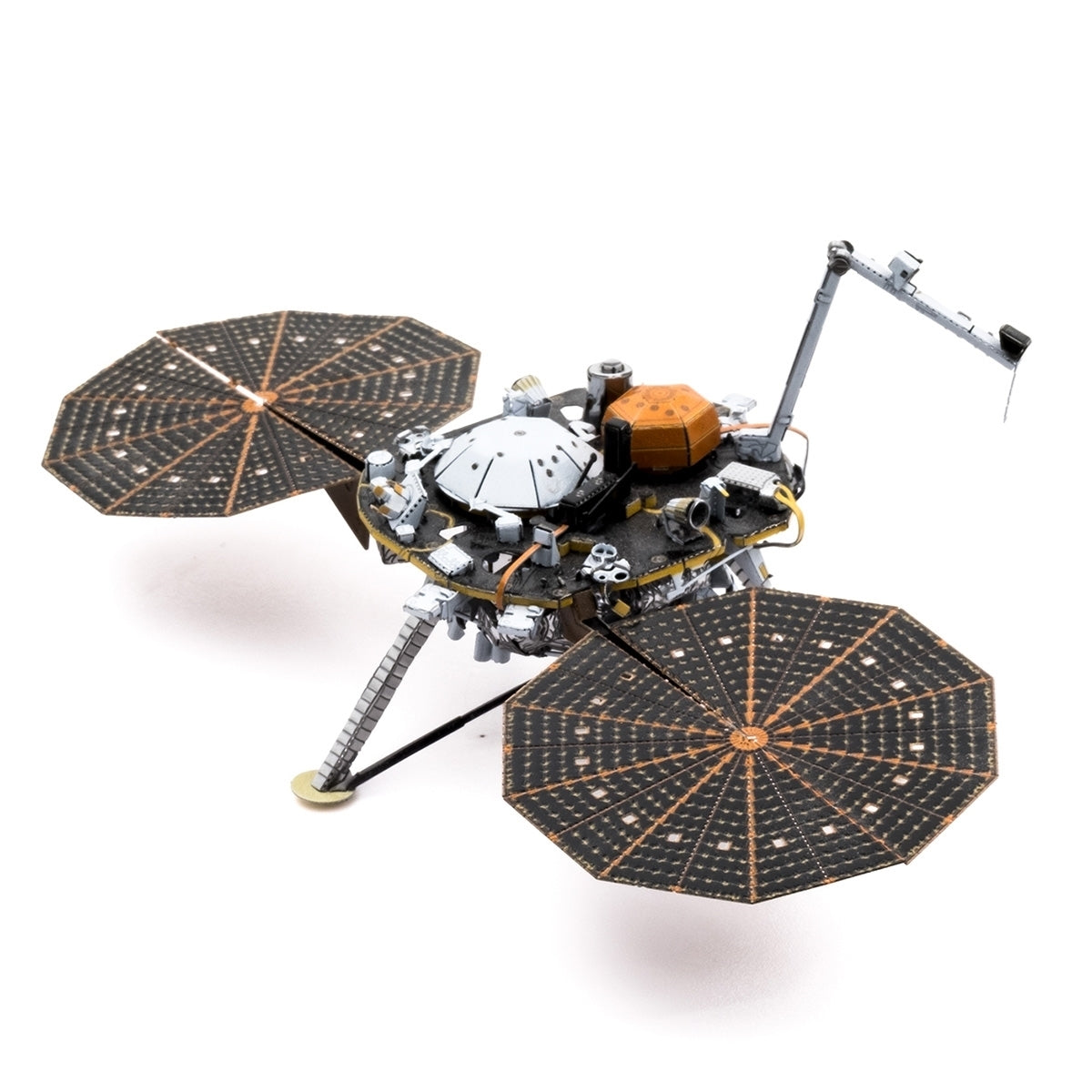
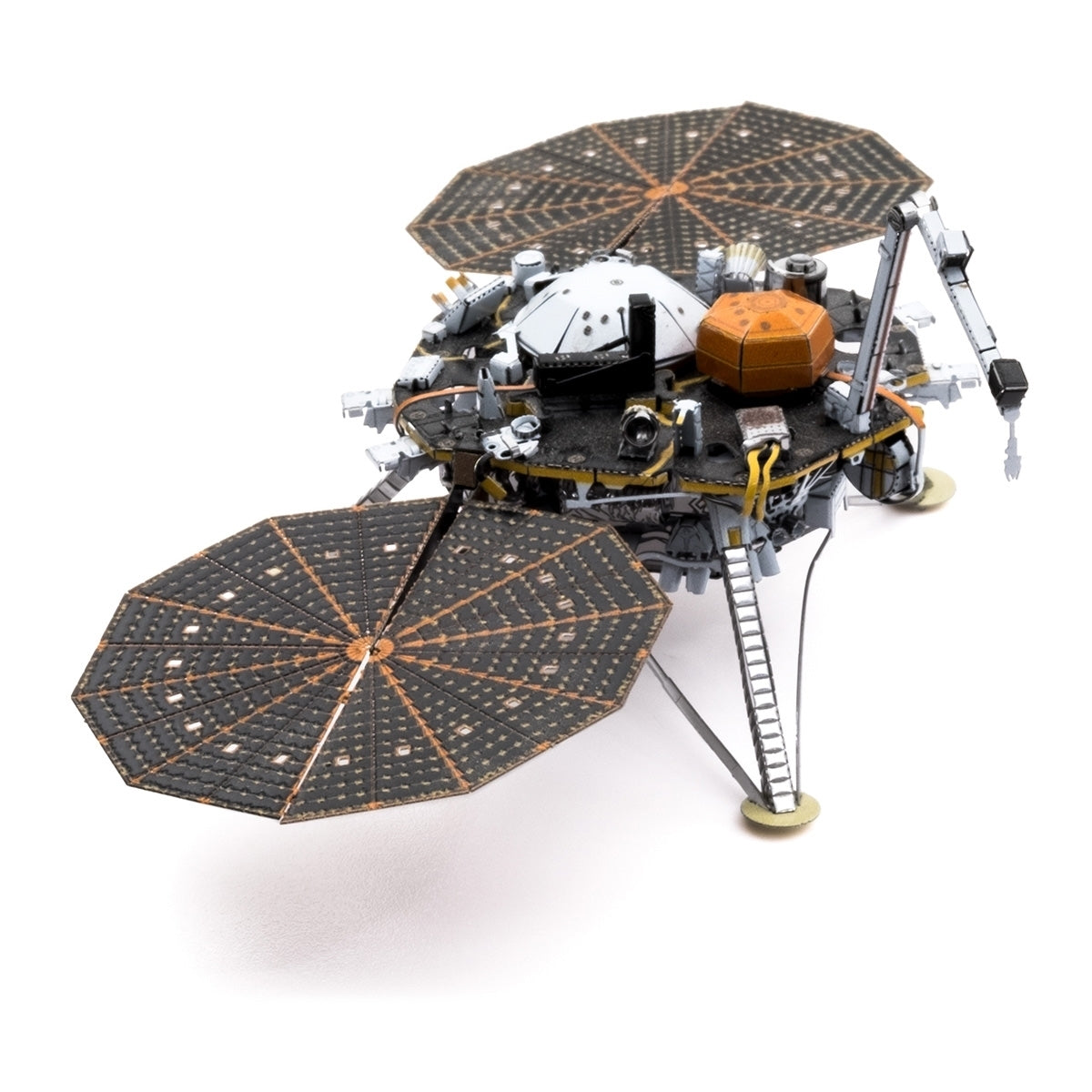
This challenging Metal Earth 3D Model Kit recreates InSight’s distinctive circular solar arrays, instrument deck, robotic arm, and landing legs. Its broad shape makes the completed model an especially striking addition to a Mars exploration display.
Model Specifications:
-
Item Number: MMS193
-
Difficulty Level: Challenging
-
Number of Sheets: 2 Sheets
-
Assembled Size: 5.9" L x 2.2" W x 2.5" H (14.99 x 5.59 x 6.35 cm)
-
Ages: 14+
🛠️ Download the Official Assembly Instructions (PDF)
🔭 From the Desk of Paul Bracken:
"InSight didn’t drive across Mars to take in dramatic panoramic vistas. It simply sat very still and listened—and that patience completely changed our understanding of the planet. Detecting more than 1,300 marsquakes and using them to probe the Martian crust, mantle, and core was an extraordinary scientific achievement. This model’s wide solar arrays and delicate instruments make it a challenging build, but they also produce a wonderfully distinctive display piece. Keep the fine tweezers handy for this one!"