Hold the cosmos in your hands.
Before the days of high-speed internet, the best way to see the latest robotic exploration images from the Viking and Voyager missions was to write to NASA's Jet Propulsion Laboratory and ask for a press packet. We've recreated that thrilling, tactile experience with our exclusive line of high-quality physical photo prints.
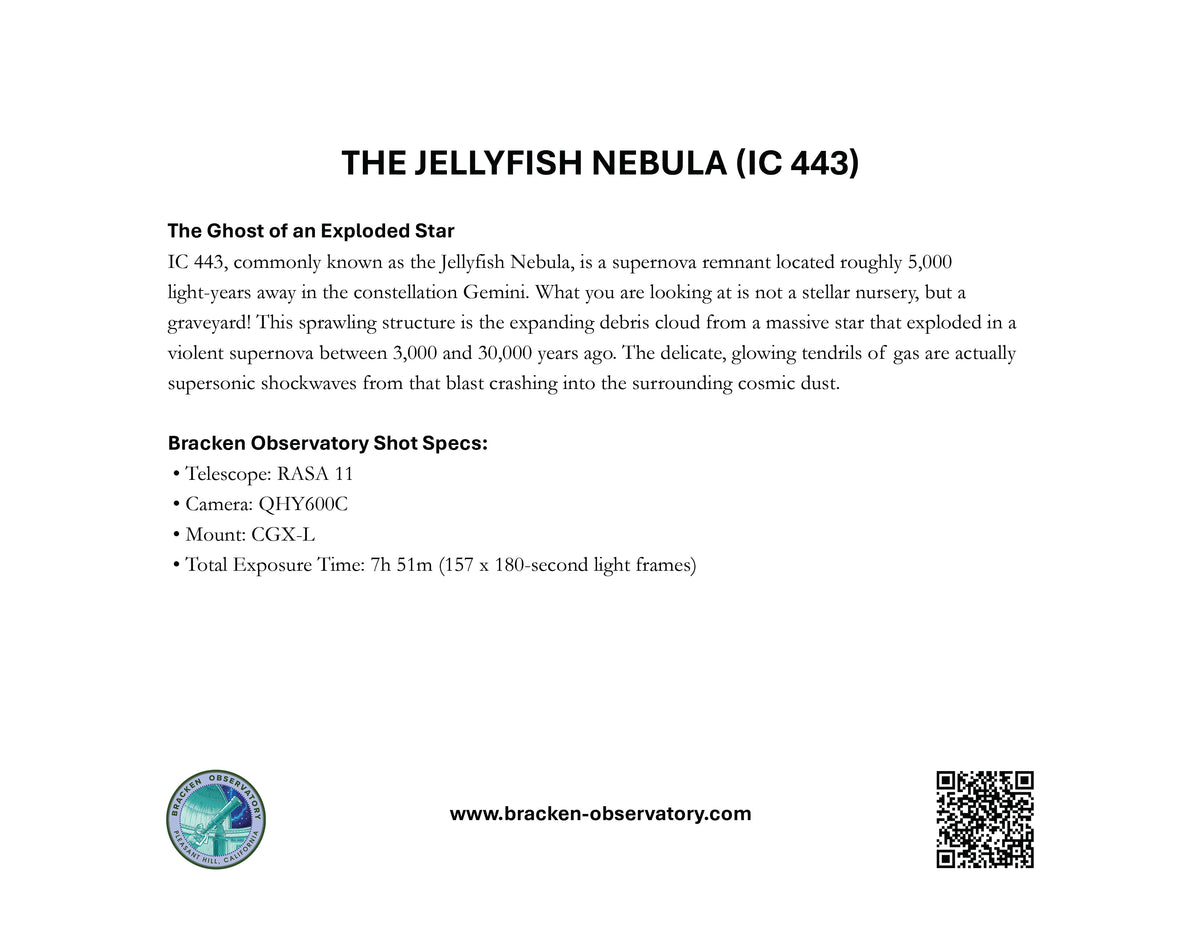
This 8.5" x 11" print features IC 443 - The Jellyfish Nebula. Located roughly 5,000 light-years away in the constellation Gemini, what you are looking at is not a stellar nursery, but a graveyard! This sprawling structure is the expanding debris cloud from a massive star that exploded in a violent supernova between 3,000 and 30,000 years ago. The delicate, glowing tendrils of gas you see are actually supersonic shockwaves from that blast crashing into the surrounding cosmic dust. Produced on premium one-sided gloss paper, this piece delivers stunning clarity and vibrant colors on the front.
On the reverse side, you'll find an engaging scientific description of the supernova remnant, along with the exact Bracken Observatory equipment and exposure specs used to capture the shot—including nearly 8 hours (7h 51m) of exposure time with our RASA 11" telescope—just like the classic JPL media packets of the 1980s.
Whether you're an educator looking for engaging classroom materials, a parent sharing the wonders of the universe with your kids, or an astronomy enthusiast wanting a beautiful physical print to frame, this is the perfect way to experience the cosmos away from a screen.
Product Details:
-
Dimensions: 8.5" x 11" (Standard Letter Size)
-
Material: Premium one-sided gloss photo paper
-
Features: High-resolution image on the front; science facts, shot specs, and an interactive QR code to the online showroom on the back
🔭 From the Desk of Paul Bracken:
"The Jellyfish Nebula is one of my absolute favorite targets. We spend so much time imaging the birth of stars that it's fascinating to point the telescope at the aftermath of a massive stellar death. The RASA 11 does a phenomenal job of capturing those delicate, glowing tendrils of gas, which are actually the shockwaves of a supernova still rippling through space thousands of years later. Holding this physical print is a great reminder of just how dynamic and ever-changing our universe really is."